What you should look for when choosing a supplement manufacturer
Choosing the right supplement manufacturer is one of the most important decisions a nutrition brand will make. Your manufacturing partner has a direct influence on product quality, consistency, availability and, ultimately, the reputation of your business.
Price will naturally be part of the decision, but it should never be the only consideration. A quotation that looks attractive initially may prove costly if the manufacturer cannot maintain quality, meet lead times, or provide the capacity your business needs as it grows.
Before committing to a manufacturing partner, there are several important areas to assess.
UK or overseas manufacturing?
One of the first decisions is whether to work with a UK manufacturer or source products from overseas. Overseas manufacturing can sometimes appear less expensive, but the headline price does not necessarily reflect the total cost or level of risk. Businesses should consider freight, import costs, longer supply chains, communication, delivery times, and the level of oversight they will have throughout the manufacturing process.
Working with a UK manufacturer can make it easier to communicate, visit the manufacturing facility, and understand how products are being made. It can also provide greater visibility over quality procedures and make it easier to resolve problems when they arise.
Wherever a manufacturer is based, the important question is whether it can demonstrate robust and consistent standards rather than simply make reassuring claims.
Check the manufacturer’s accreditations
Recognised accreditation should be near the top of your checklist. For example, BRCGS certification provides an internationally recognised framework covering areas such as food safety, quality management systems, staff training, traceability, and manufacturing controls. It gives customers independent reassurance that appropriate systems and procedures are in place. Do not be afraid to ask detailed questions, such as:
- What accreditations does the manufacturer hold?
- When was it last audited?
- How does it monitor raw materials and finished products?
- What traceability systems are in place?
- How are non-conformances investigated and resolved?
- How does it manage staff training and hygiene?
A reliable manufacturer should be open about its procedures and able to provide clear evidence of the standards it follows.
Make sure its expertise fits your product
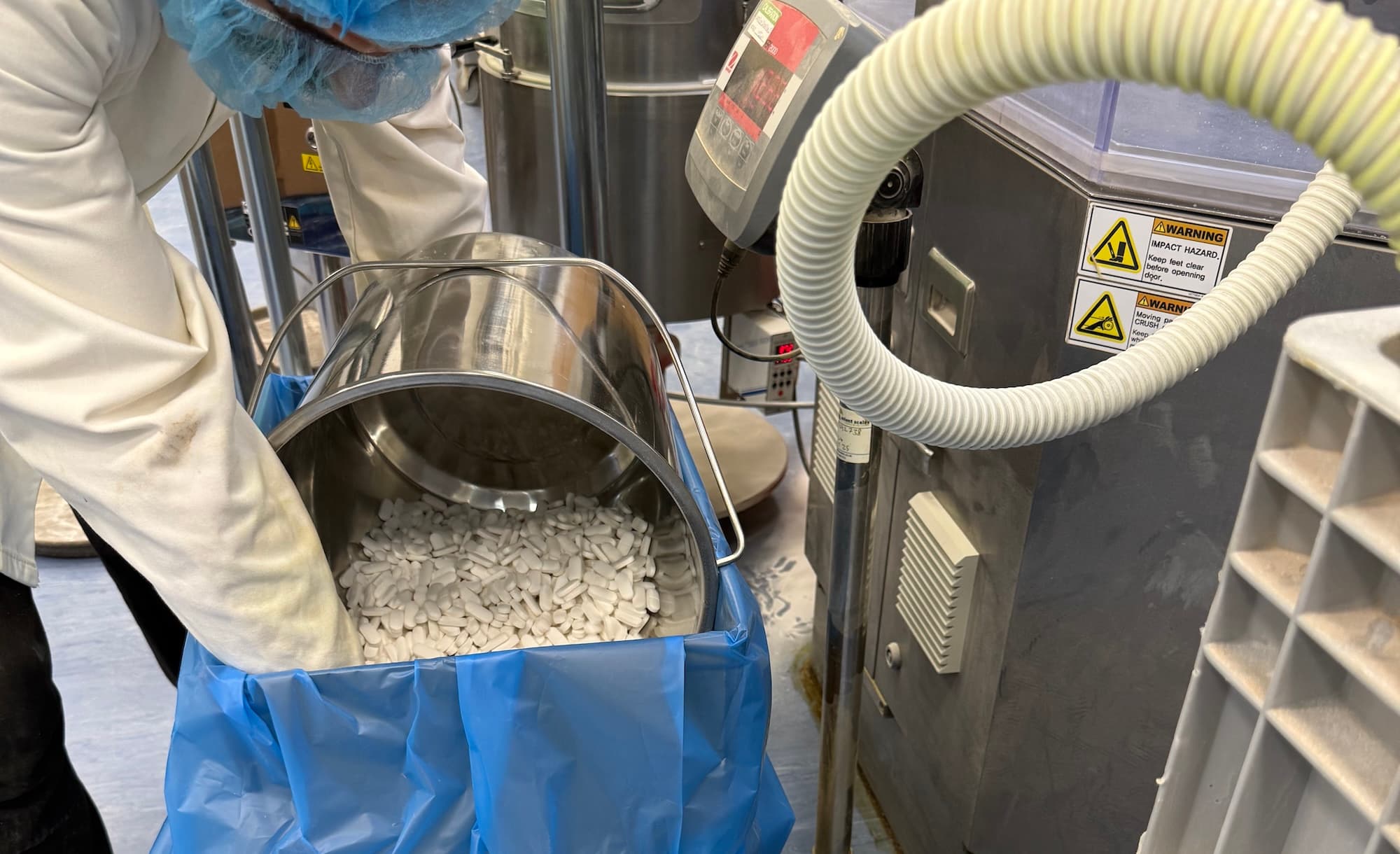
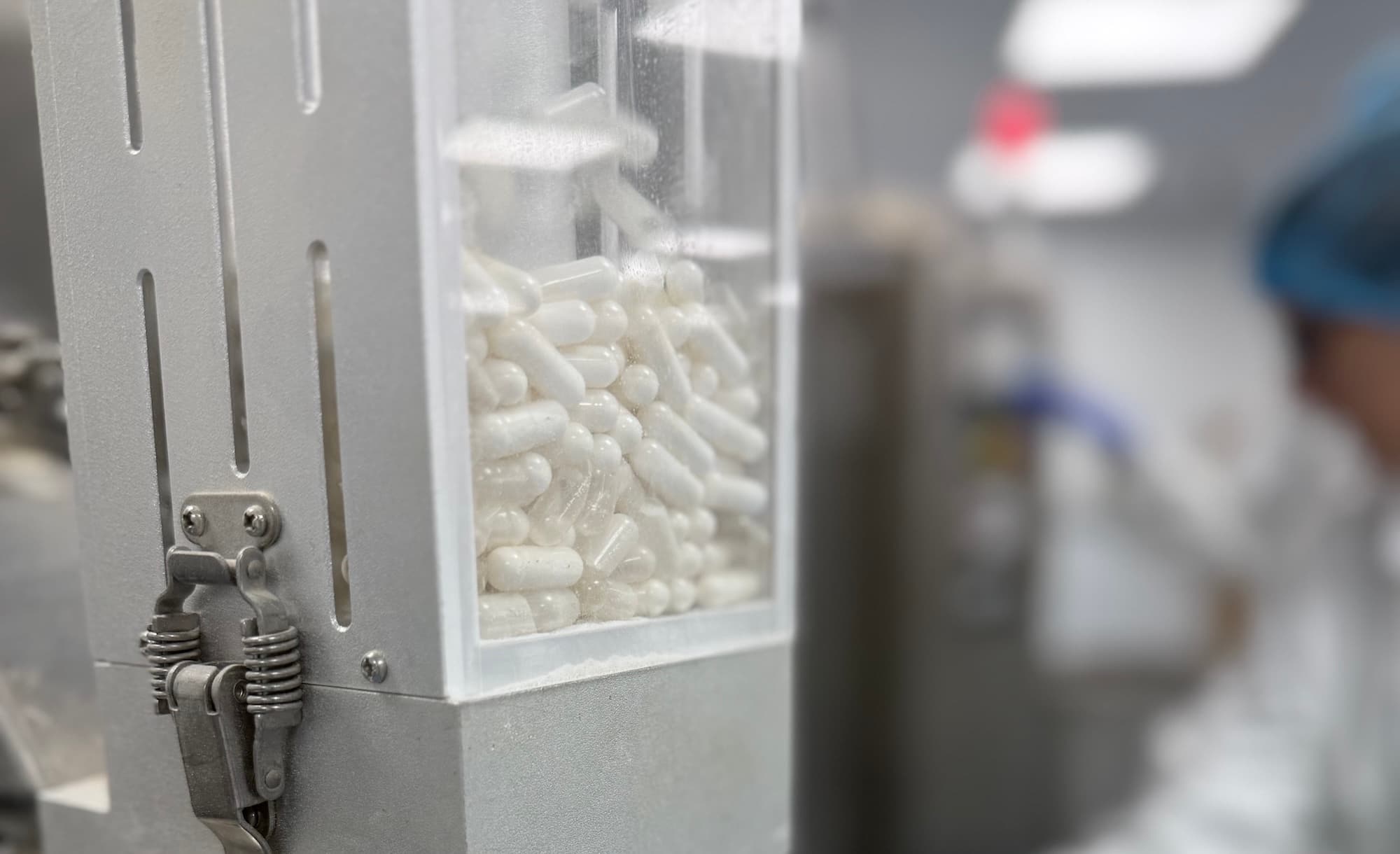
Supplement manufacturing is not a single discipline. Different manufacturers may specialise in tablets, capsules, soft gels, powders, liquids, or other formats. It is therefore important to find out what a potential partner is genuinely good at. A manufacturer may offer a wide range of services, but that does not necessarily mean it has equal experience or production capacity in every format.
If tablets and capsules are central to your product range, for example, you should look closely at the manufacturer’s equipment, technical knowledge, and production record in those formats. The right partner should understand the practical challenges associated with your chosen format and be able to explain how it will achieve a consistent finished product.
Discuss minimum order quantities and future capacity
A manufacturer may be suitable for the size of your business today but unable to support it in the future. Ask about minimum order quantities, or MOQs, at an early stage. These need to be commercially realistic for your current sales volume and stockholding position. At the same time, establish how far the manufacturer can scale production if demand increases. Businesses can encounter problems when a manufacturer lacks the physical capacity to produce the required volume or cannot allocate enough production time without affecting its other customers.
Useful questions to ask include:
- What is the MOQ for each product format?
- How much production capacity is currently available?
- How quickly can volumes be increased?
- Is capacity reserved for established customers?
- What investment is being made in new equipment and facilities?
These conversations can help you avoid the disruption and expense of changing manufacturers just as your brand begins to grow.
Look for scientific and formulation expertise
A good manufacturer does more than take an ingredient list and turn it into a finished product. It will be able to provide informed input during product development and help you make practical formulation decisions. In addition, scientific knowledge is particularly valuable when selecting ingredients, assessing their intended purpose, and considering the evidence behind a formulation. It can also help identify potential problems before production begins.
This expertise should extend to manufacturing practicality. For example, a customer may want to minimise excipients or develop a cleaner-label formulation. The manufacturer should be able to discuss whether the proposed specification can be produced consistently and suggest appropriate solutions where adjustments are needed.
While digital tools can support research, they are not a substitute for experienced scientific and technical judgement.
Assess lead times and reliability
There is no hiding the fact that availability matters. A high-quality product is of limited value if it repeatedly arrives too late to meet customer demand.
Ask potential manufacturers for realistic lead times and how they respond to urgent or unexpected increases in volume. This can be particularly important for e-commerce brands, where campaigns, social media activity, or changing consumer trends may create a sudden spike in orders. Capacity plays a major part in this. A manufacturer that continues to invest in its production capabilities will usually be better positioned to respond flexibly and reduce turnaround times as demand changes.
It is also worth asking for examples of how the manufacturer has handled supply challenges, as reliability is ultimately demonstrated through performance, not promises.
Understand testing and quality monitoring
Testing is becoming an increasingly important part of supplement manufacturing. Ask whether the manufacturer tests raw materials and finished products, what characteristics it monitors and whether appropriate testing is conducted internally or through independent third-party laboratories.
It is also worth discussing how the formulation accounts for nutrients that may be affected by manufacturing or degrade during the product’s shelf life. Depending on the ingredient and product specification, a carefully calculated overage may be considered so the product continues to meet its declared specification throughout its intended life. This must be based on appropriate technical assessment rather than simply adding an arbitrary amount of an ingredient.
A manufacturer should be able to explain its approach clearly, maintain appropriate records, and provide traceability for any checks carried out.
Choose a partner, not simply a supplier
Successful manufacturing relationships are built on more than equipment and accreditations. Fair pricing, responsive customer service, and honest communication all matter. Even well-managed production environments can encounter unexpected issues. The real test is how the manufacturer communicates, investigates the problem, and works with its customer to resolve it.
A partner that understands your goals and keeps you informed is far more valuable than one that simply processes orders. Consistent product quality must be the foundation, but transparency and a strong working relationship are what allow the partnership to develop over time.
How DSC Nutrition can support your supplement brand
At DSC Nutrition, we support businesses with the manufacture of high-quality supplements, with expertise in tablet and capsule production. Our combination of manufacturing knowledge, scientific understanding, and scalable capacity enables our team to support established brands as well as businesses planning for future growth.
Quality monitoring continues to form an important part of our support. The development of our own internal QC laboratory enables us to carry out a range of basic checks, with our testing capabilities continuing to expand. This investment will provide us with additional visibility over our manufacturing processes, whilst strengthening the ongoing monitoring that supports consistent product quality.
Whether you are developing a new supplement or looking for a manufacturing partner with the capacity to support an existing product range, DSC Nutrition can help you explore your options and establish a practical route to production.
To discuss your supplement manufacturing requirements, contact the DSC Nutrition team today.