From concept to shelf - how a supplement gets manufactured
Bringing a supplement to market can look deceptively simple. You have an idea, develop a formula, put it into a bottle or pouch and get it onto the shelf.
But in reality, there is a lot more involved.
From choosing the right ingredients and determining appropriate dosages, to deciding on the most suitable format, managing raw material availability, and carrying out quality checks throughout production, there are several important steps between the initial concept and a finished supplement.
At DSC Nutrition, we work with supplement brands at different stages of this journey. So, what does the process actually look like?
It starts with an idea
Every supplement starts somewhere. Some customers have a clear idea of what they want to produce, including a formula and specific ingredients. Others may have a particular function or benefit in mind - perhaps a gut health product or a colon cleanse - but no idea yet how that objective can be achieved through a formulation. In those cases, the first step is often to develop or source a suitable formula before manufacturing can begin.
Where a customer already has a formula, we can work with them to assess the ingredients, adapt the formulation where necessary, and consider how it fits their target budget and position in the market. We also encourage brands to develop products that are genuinely their own. Rather than simply copying an existing product, there may be opportunities to add or remove ingredients and create a formulation with its own identity.
The ingredients matter
Once a formula has been established, one of the first practical considerations is the availability of the required raw materials. We look at which ingredients are already held in stock and which may need to be purchased specifically for a particular production run. This can have a direct impact on cost and minimum order quantities.
Where the ingredients required are in stock, it may be possible to offer a more competitive price because those materials can be purchased in larger volumes. However, if a particular ingredient needs to be sourced specifically for a customer, the supplier's minimum order quantity can become a factor. For example, if a supplier has a minimum order quantity of 25kg for a raw material but a customer's production run only requires 3kg, that minimum quantity must be considered when costing the product. It is one of the reasons why the availability of raw materials can make a significant difference to both the quantity that can be produced and the final price.
Formulation isn't just about choosing ingredients
There is also an important scientific consideration when selecting raw materials. Where possible, standardised raw materials can provide greater clarity around the level of an active ingredient within an extract. For example, an extract may be described as a 10:1 or 20:1 extract, but that doesn't necessarily tell you how much of the relevant active compound it contains. A standardised ingredient, on the other hand, can specify the percentage of a particular active constituent.
This can make the ingredient more expensive, so once again there is a balance to strike between the desired formulation, its effectiveness, and the customer's target price. Vitamins and minerals also need careful consideration around dosage and recommended nutritional values, as well as applicable upper limits. The strength of the formulation can then influence other decisions, including how many tablets or capsules make up a serving.
Choosing the right format
Should a supplement be a tablet, capsule, or powder?
There isn't always a single right answer. Customer preference is important, but the formulation itself can also influence the decision. Tablets require binders and other components to hold the formulation together, whereas capsules can allow a greater proportion of the contents to be the active formulation itself. Dosage is another important consideration. Take creatine as an example - a typical serving can be around 5g, which makes powder a practical format for mixing into a drink. Put the same quantity into capsules and you could need several capsules to achieve the same serving.
That doesn't mean capsules or tablets aren't suitable for creatine, but the practical implications need to be considered when developing the product.
The same applies to other ingredients. Vitamin C, for example, can be produced as a powder, tablet, or capsule, depending on the formulation and what else is being included. Ultimately, the format needs to work for the product, the dosage, and the customer.
From approved formula to production
Once the formula has been agreed, a quotation can then be provided along with the relevant specification sheets. Following approval, the order moves into the production planning process.
The production scheduler works with the purchasing department to establish whether all the necessary raw materials are available. If anything needs to be ordered, supplier lead times need to be factored into the schedule. Only once the materials are available can the production date be confirmed - and that date also depends on how busy the manufacturing schedule is.
This is one of the areas where supplement brands can sometimes underestimate the time involved in getting a product to market. For new customers, typical lead times can be around 8–10 weeks, although this can vary depending on the customer, product, and production schedule. Planning ahead is therefore an important part of the manufacturing process, particularly for smaller or newer brands that may not yet have the forecasting and stock planning processes of larger supplement businesses.
Manufacturing and quality control
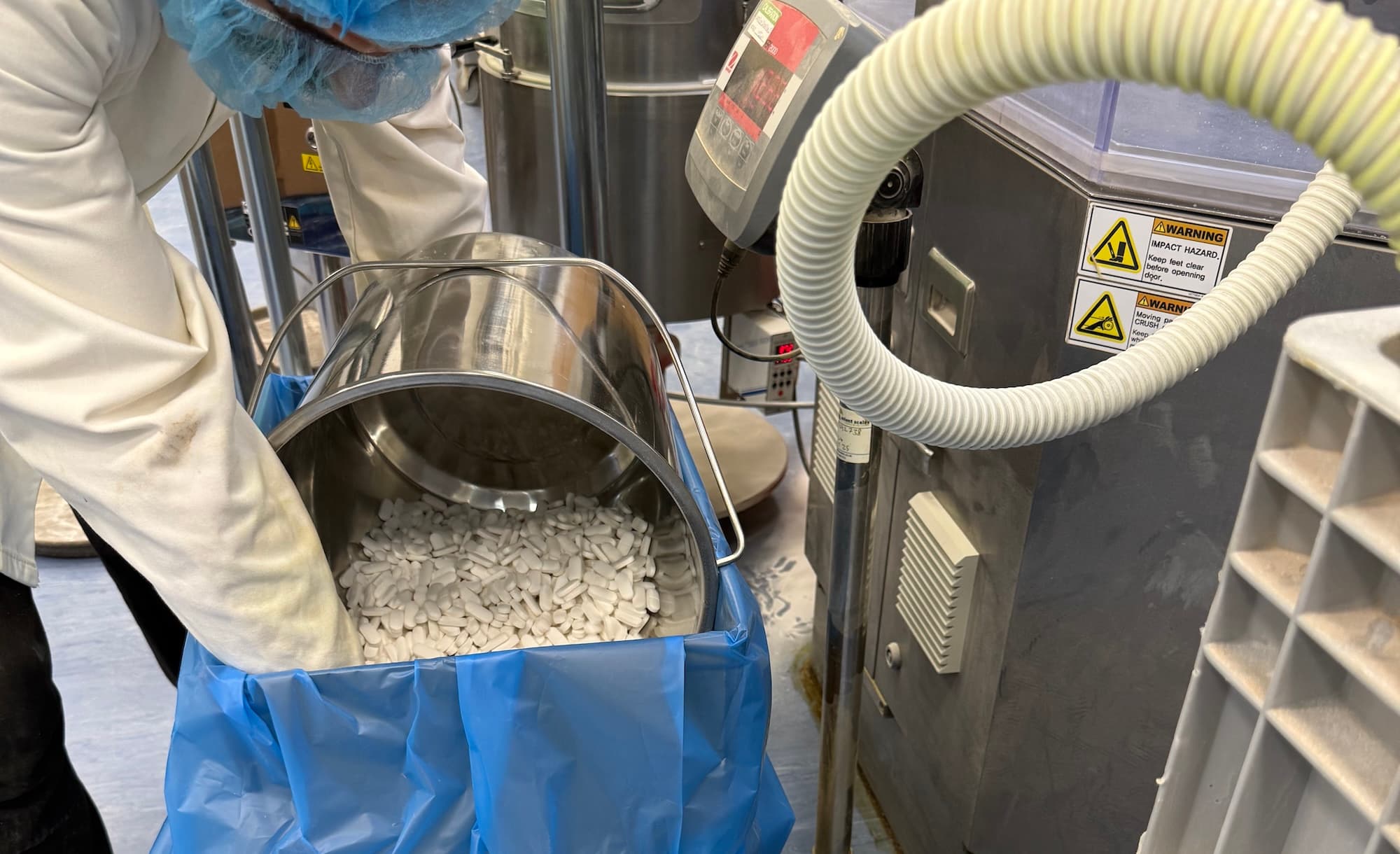
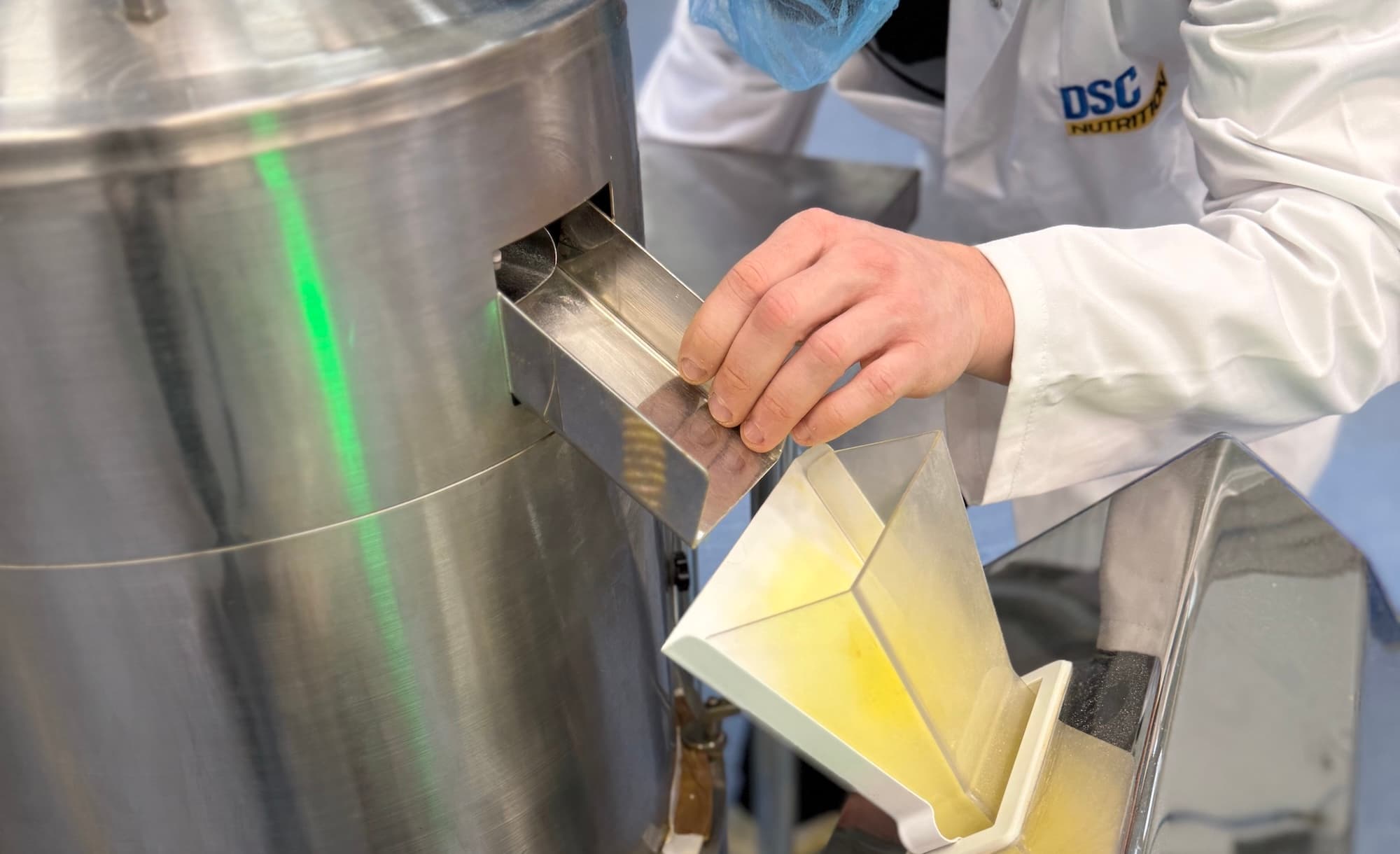
Once production begins, there are multiple checks throughout the process. Raw materials are picked and weighed before being sent for mixing. Process sheets are used to check that the correct materials have been selected and that they have been weighed accurately.
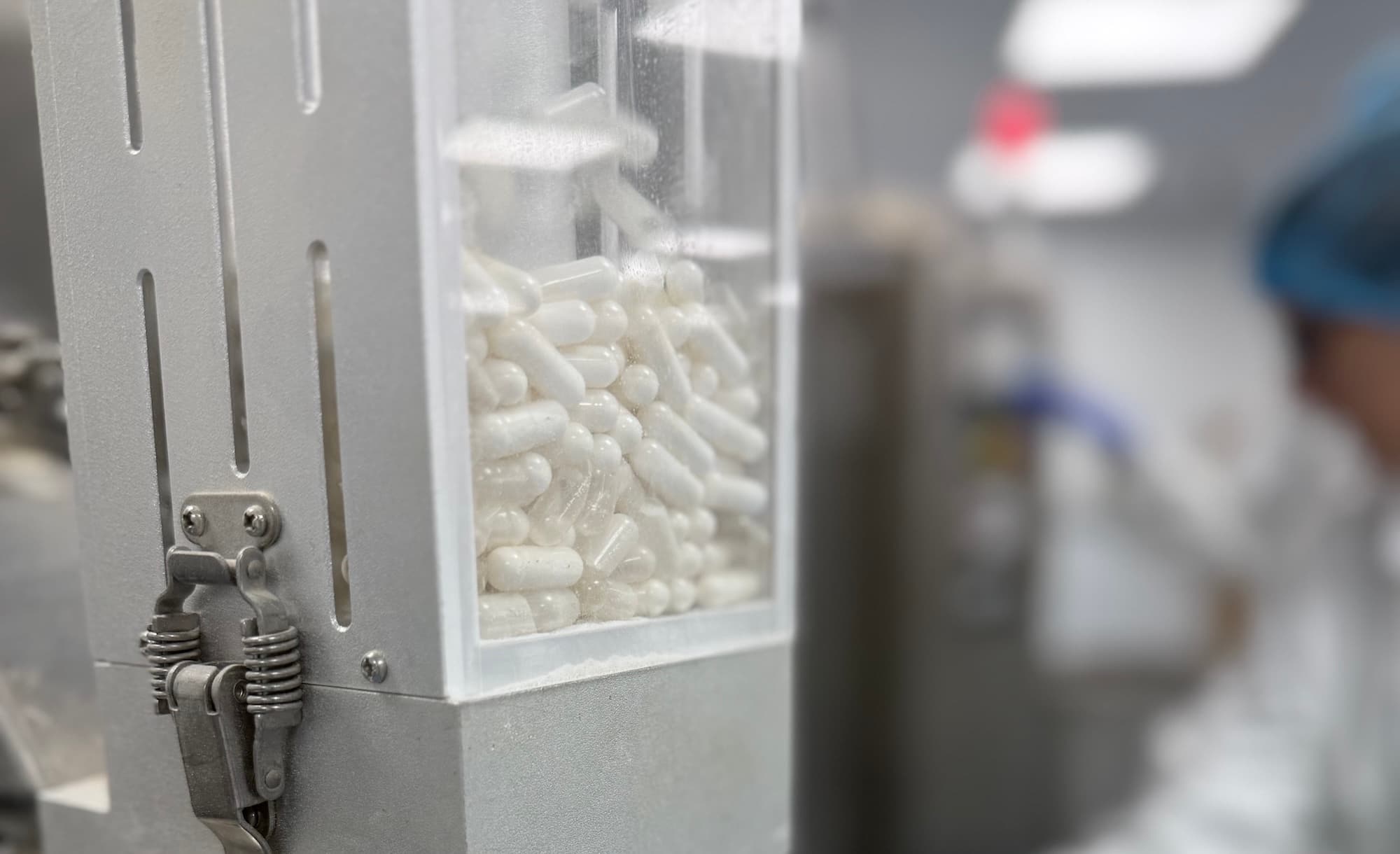
Following mixing, the resulting material is checked again before moving onto the next stage of production. Depending on the product, this may involve tableting or encapsulation. Samples are taken from the machinery at regular intervals throughout production, while tablet and capsule weights are checked to ensure consistency. Samples from different points during the production run are retained.
The finished product then moves through to packaging - whether that is into pouches or bottles. Quality checks continue at this stage, and include checking that tablets aren't damaged during packaging, that the correct quantity has been packed, and that the correct label has been applied. A finished sample is also retained.
This means that if a question or query about a product arises in the future, there is a retained sample from the original production run that can be referred to.
Getting from concept to shelf
The journey from an initial supplement idea to a finished product involves considerably more than simply mixing ingredients and putting them into packaging. There are formulation decisions to make, raw materials to source, minimum order quantities and costs to consider, production schedules to manage, and quality checks to complete throughout the process.
For supplement brands, understanding these steps early can make the journey much smoother. At DSC Nutrition, our role is to work with customers through these practical considerations and turn an initial concept or agreed formula into a finished product ready for the market.
Partner with DSC Nutrition
To find out more about how DSC Nutrition can help you with bringing your supplement product to life, please contact us.
More News & Insights
What you should look for when choosing a supplement manufacturer
Choosing the right supplement manufacturer is crucial for product quality, scalability, and compliance. Discover the key factors to consider, from accreditations and testing to capacity and scientific expertise.
3D printing in supplement manufacturing - driving innovation behind the scenes
Read our latest article on how 3D printing is becoming increasingly used in the supplement production process.